
CNC TURNING
SERVICE
Upload the file containing your part design
and we’ll send you a quote in no time.


Capabilities for CNC turning
available at Dekide
CNC LATHES CAN TURN HIGH-PRECISION WORKPIECES
TO MEET THE MOST DEMANDING QUALITY STANDARDS

MAXIMUM DIAMETER
1600mm

MAXIMUM WEIGHT
20 Tn

MAXIMUM LENGTH
8000mm

BATCHES
From one-offs to mass production

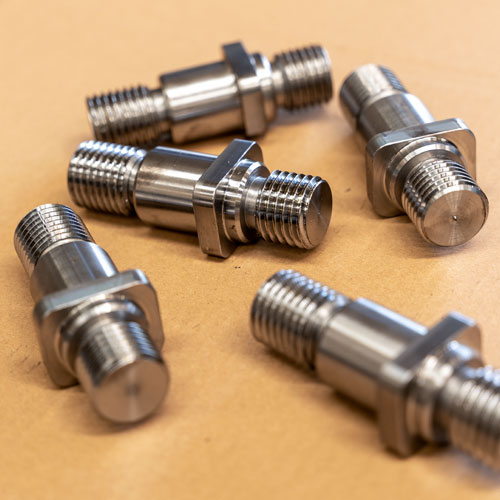


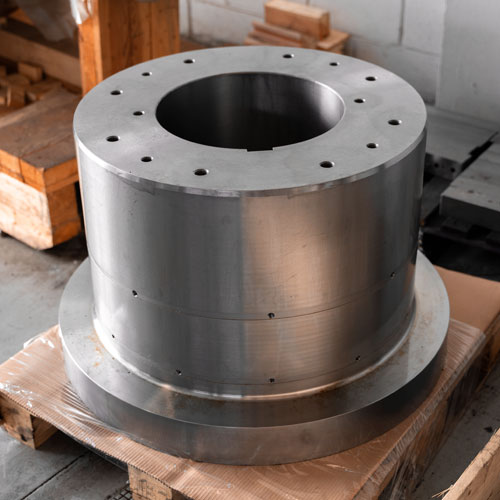
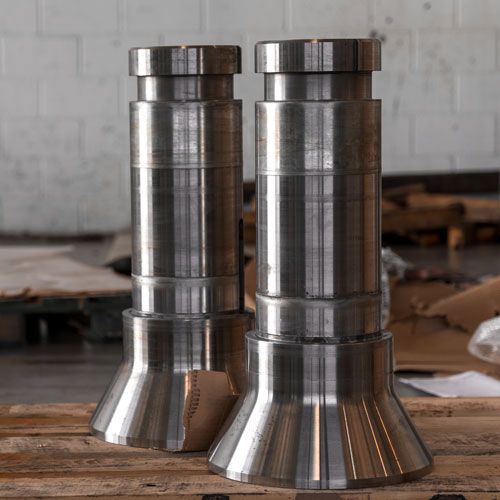
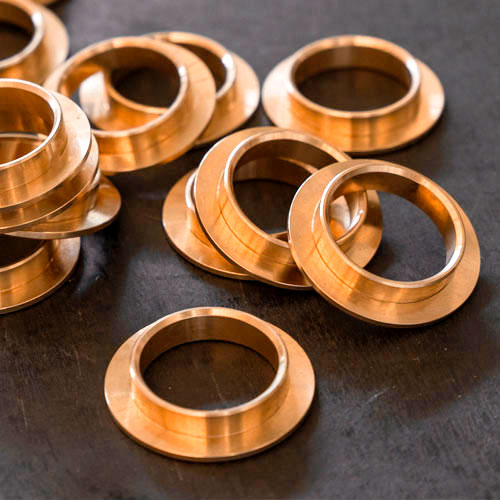
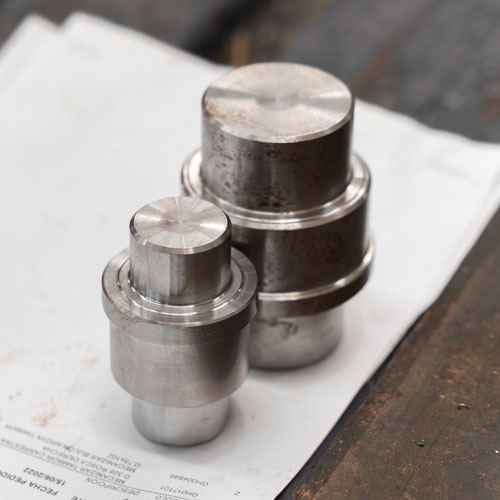
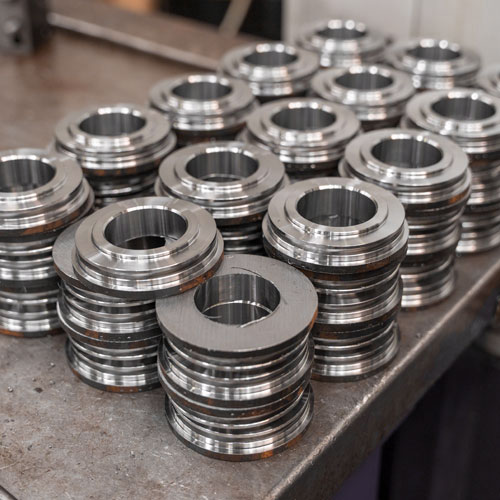

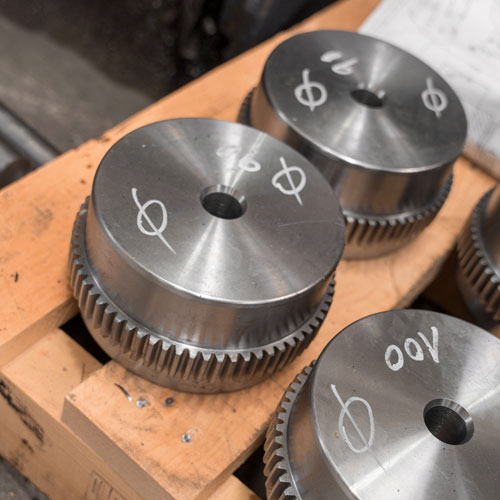


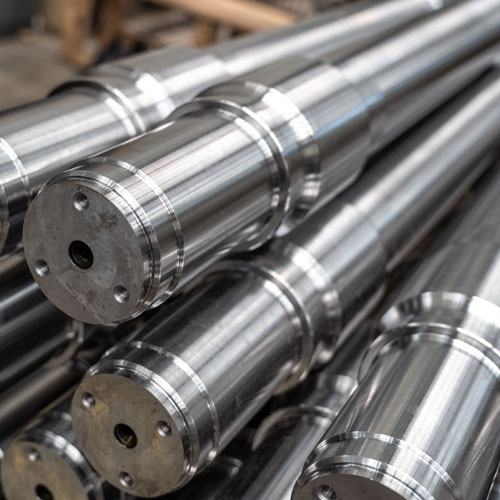


Parts produced by
CNC turning service at Dekide
Do you need any of them?

Competitive prices

Short lead times

From prototypes to series
Turning
CNC


What is turning?
CNC lathe types depending
on the direction of the headstock
Vertical
CNC vertical lathe
The peculiarity of this type of lathe is that its main axis sits vertically to the ground. It is mainly used to make heavy and large swing over bed parts, given their higher dimensional capacity and simplicity when it comes to mounting the workpiece.
Horizontal
CNC horizontal lathe
This is the most common type of lathe. Its rotation axis sits parallel to the ground and is used to machine countless parts. Many lathes offer the possibility of using a Lunette, an ideal accessory for machining slender parts.
Multi spindle
CNC multi spindle lathe
As a means of production, the multi-spindle lathe is mainly known in the world of decolletage, enabling the machining of multiple parts at the same time. Each spindle machines a specific part of the workpiece. Multi-spindle lathes are mainly used to machine small parts and long production runs.
Multi tasking
Multi tasking lathe
Multi tasking lathes are also designed to conduct milling work. This type of lathes has an extra cutting tool making this the most efficient option for turning complicated workpieces involving milling operations, given that it can make parts from start to finish with no need to use a milling machine.
Auxiliary operations
for CNC machining
SOME OF THE PARTS MADE AT DEKIDE REQUIRE
AN ADDITIONAL OPERATION TO MEET
THE CUSTOMER’S REQUIREMENTS
Grinding
Grinding is a process whereby a grinder removes short, thin slivers of material to obtain a surface with a particular finish, accurate geometrical shapes and a dimensional precision generally superior to that achieved with other machining processes.
Hobbing
This is the CNC machining process used to produce teeth on elements previously machined by turning in the case of revolving elements or by milling in that of non-revolving components. This milling process creates tooth-shapes on the part surface It is a procedure very widely used to manufacture gears and racks.
Mortising
This is the milling process whereby the tool machines the workpiece thanks to an alternative rectilinear back and forward movement applied to parts fixed to the machine table. This enables the machining of planar surfaces parallel to the cutting direction.
Other operations
As well as the above-mentioned operations, others commonly used in part machining, such as drilling, threading and sawing can also be carried out.

Materials, treatments
and tolerances

Available materials
for CNC machining


Treatments and
surface finisihes
Surface treatments and finishes are applied after machining and can change the appearance, surface roughness, hardness and chemical resistance of the parts produced.


Tolerances for
CNC machining

Success stories
Success story 1

Mechanically welded parts
Customer AN ENGINEERING
Sector RAILWAY
Quantity 3 UNITS
Material STEEL
THE CASE
An engineering company had designed hoisting equipment for a customer in the rail sector. These are mechanically welded parts for use in the handling of heavy parts, meaning that they have high quality requirements.
Their usual manufacturing supplier had too much work and was therefore unable to complete the job in the time needed by the engineering company In addition, this was a part requiring several manufacturing processes (laser, oxy cutting, welding, machining and painting).
THE SOLUTION
Dekide succeeded in supplying the parts completely finished and at a highly competitive price in only a month.
Success story 2

Bushing
Customer STEELWORKS
Sector METALLURGY
Quantity 500 UNITS
Material BRONZE
THE CASE
A steelworks located in Northern Spain very regularly subcontracts the manufacturing of bronze bushings. These are parts that wear down frequently, meaning that they repeatedly purchase them in batches of 500 units. Given the high consumption of this kind of parts, the Purchasing Department decided to try and find a cheaper supplier and sent a request for quote to Dekide.
THE SOLUTION
After analysing the parts, Dekide offered a price 20% lower than normally paid for the part by the steelworks. Dekide has its own warehouse, meaning that it offered to keep a buffer stock at its facilities to guarantee an unbroken stock flow.
Success story 3

Precision part
Customer TEACHERS AND STUDENTS
Sector EDUCATION
Quantity 1 UNIT
Material ALLOY STEEL (F-1252)
THE CASE
A group of engineering professors and students had conducted a project to design a part in alloy steel to be exposed to very demanding work stress. In order to study its viability they wanted to start by building a prototype on which to run a number of mechanical tests. This is a part of complex geometry and precision. Its production can only be guaranteed by a supplier with special equipment and experience in precision machining.
THE SOLUTION
One of the students discovered Dekide through social media and requested a quote on our website. They received a quote in less than 48 hours and 14 working days later the part was in the university. After running the test and making a few tweaks to the design, the university team decided to make another 5 units.


From prototypes
to mass
production

WE ARE THE TRUSTED CHOICE OF CUSTOMERS SUCH AS…